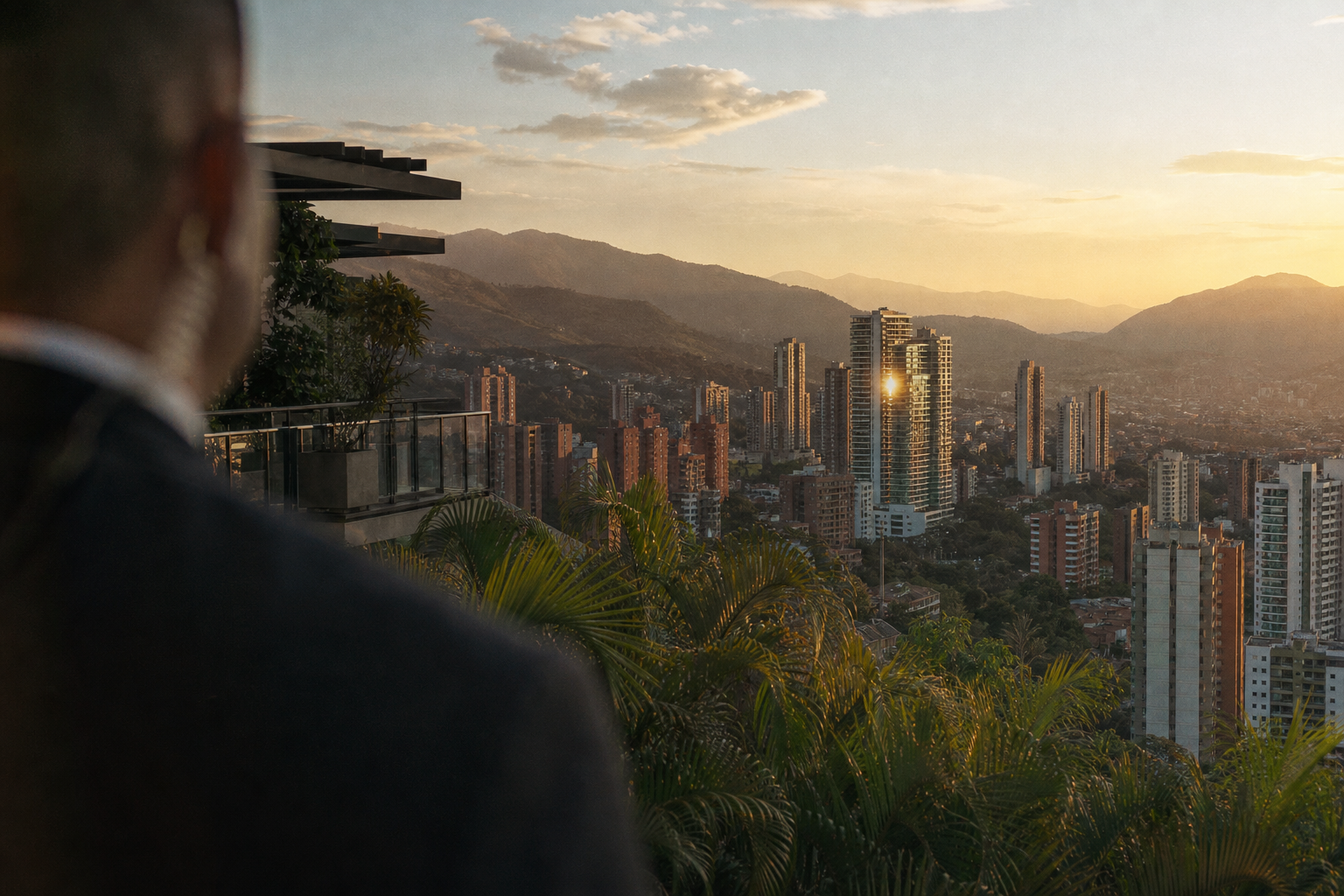
Colombia in 2026 is safer than the headlines suggest for travelers who follow protocol. Stay in El Poblado (Medellin), the Walled City (Cartagena) or Zona G/Chico (Bogota), use only vetted private transport, and keep your security footprint low. The risks that remain are real, but manageable, predictable, and largely avoidable.
- First-time visitors to Colombia researching real security conditions beyond travel advisories
- Repeat visitors updating their knowledge of neighborhood and transport safety
- Travel planners sourcing factual safety information to share with clients
- Anyone planning a multi-city itinerary across Medellin, Cartagena, and Bogota
Colombia in 2026: The Gap Between Perception and Reality
Colombia received over 6 million international visitors in 2025, a record figure that reflects a country that has undergone genuine transformation over the past two decades. Medellin, once the most dangerous city on earth, is now a regular on global "cities to visit" lists. Cartagena is one of the most-visited Caribbean destinations. Bogota hosts a thriving financial district and restaurant scene ranked among Latin America's best.
The perception gap is significant. Colombia's international reputation was built in a different era, and the US State Department's Level 3 advisory ("Reconsider Travel") reflects ongoing rural insecurity from FARC dissident factions in departments like Chocó, Cauca, and Arauca, not conditions in the tourist zones where virtually all international visitors spend their time.
The practical question for luxury travelers is not "is Colombia dangerous?" It is "what specific risks exist in the places I will be, and what protocols reduce those risks to an acceptable level?" That is what this guide answers.
Where to Stay: Neighborhood Safety by City
The single most impactful safety decision you make in Colombia is where you base yourself. Each major city has established luxury zones with international hotel presence, dedicated security infrastructure, and significantly lower incident rates than surrounding areas.

Transport: The Single Highest-Risk Variable
If there is one consistent factor in incidents involving tourists in Colombia, it is unvetted transport. Street-hailed taxis have been the vector for the majority of express kidnappings (locally called paseo millonario) and armed robberies reported by tourists. This applies across all three major cities.
Ride-share apps (Cabify, InDriver) are safer than street taxis but still carry risk when the app account is shared or when drivers use vehicles registered to other users, a known workaround that Colombian rideshare platforms have not fully eliminated.
- All drivers are background-checked and carry verified CLS operator ID
- Vehicles are tracked via GPS with routes logged and shared with CLS concierge
- Clients receive driver name, photo, and plate number before pickup
- No street pickups; all transfers depart from confirmed hotel or property addresses
- Bilingual concierge contact available 24/7 during ground transport
- Route changes require verbal confirmation with the CLS concierge line
- Airport arrivals include escort through arrivals hall to the vehicle, with no curbside wait
Accommodation: Security Infrastructure at Luxury Properties
Five-star hotels and vetted private villas in Colombia maintain security standards comparable to international luxury properties: 24-hour guarded entrances, CCTV throughout common areas, in-room safes, and trained security staff. The building itself is rarely the vulnerability. Incidents occur outside, in transit, or when guests deviate from standard protocols.
For private villa rentals (the preferred format for most CLS clients), we work exclusively with properties that have perimeter security, a trusted staff, and an on-call property manager. Villas sourced through informal channels or short-term rental platforms without local vetting carry higher risk of theft and, in rare cases, targeted entry.
"The luxury traveler's security posture in Colombia is not about fear. It is about quiet precision. The right neighborhood, the right transport, the right venues. Nothing about that differs from traveling well in any major world city."
Common Scams Targeting Tourists, and How to Avoid Each
The following incidents are documented by the Colombian tourism authority (ProColombia) and diplomatic missions. They are not theoretical; they occur with regularity in tourist zones. Being aware of the specific method is the most effective prevention.
- Paseo millonario (Express kidnapping): Victim enters a street-hailed taxi; driver locks doors and drives to ATMs requiring withdrawals, then releases victim. Prevention: use only vetted transport, never a street taxi.
- Scopolamine (burundanga): Sedative added to drinks or blown as powder causing temporary amnesia and compliance. Occurs almost exclusively when accepting drinks from strangers or in unlicensed venues. Never leave your drink unattended; never accept a drink you did not see poured.
- Fake police officers: Plain-clothes individuals claiming to be officers request passport and cash for "drug inspection." Real officers do not conduct this type of inspection on the street. If approached, call your hotel or CLS concierge immediately before complying with anything.
- Gem / emerald sales scam: Sellers in tourist areas offer "investment-grade" Colombian emeralds at a discount. These are universally fake or grossly overpriced. Genuine emerald purchases should only occur at certified dealers with international documentation.
- Romantic approach (honeytrap): Perpetrator develops quick rapport, invites to a residence or unlicensed venue, where the victim is drugged and robbed. Applies to all genders. Avoid any romantic solicitation from strangers in tourist zones.
Health, Emergency Services & Hospital Reference
Colombia has a tiered healthcare system. In the cities and zones relevant to luxury travel, the private clinic network is well-equipped and used to treating international patients with travel insurance. Do not use public emergency rooms (urgencias hospitalarias públicas) unless it is the only option; wait times and facilities are inconsistent.
Travel insurance with medical evacuation coverage is strongly recommended for all Colombia visits. Your insurer's 24-hour line is your first call in any medical event; they coordinate directly with private clinics and can arrange air evacuation if required.
- Medellin: Clínica El Rosario (Poblado) — nearest international-standard clinic to most luxury properties in El Poblado
- Medellin: Clínica Las Américas — full-service private hospital with English-speaking staff in several departments
- Cartagena: Clínica Medihelp Services — largest private hospital, experience with international patients and travel insurance
- Cartagena: Clínica Blas de Lezo — alternative private option, centrally located near Bocagrande hotel corridor
- Bogota: Clínica del Country (Chicó) — benchmark private hospital in Bogota's luxury zone; English-speaking staff available
CLS clients have access to a 24/7 concierge line that can coordinate medical transport, translation, and insurance liaison in any health emergency during the trip.
Frequently Asked Questions
Is Colombia safe for tourists in 2026?
What areas of Colombia should I avoid?
Is private transportation necessary for safety in Colombia?
What is scopolamine and how do I avoid it?
Which hospitals do you recommend in Medellin and Cartagena?

Plan Your Colombia Trip
with Full Security Support
Every CLS itinerary includes vetted transport, security-checked properties, and 24/7 concierge access. Tell us your dates and we handle the rest.
Keep exploring